
Studying hospitality management is exciting — one day you’re mastering front-office etiquette, the next you’re plating a five-course meal, and the day after that you’re on the floor of a real hotel for your internship. But with lectures, practicals, part-time shifts, assignments, and a social life all competing for the same 24 hours, hospitality students often feel like time is the one resource they can never seem to serve enough of.
At CATS, we believe that strong time management skills are just as essential to a hospitality career as knowing how to fold a napkin into a swan. This blog breaks down practical, easy-to-apply time management tips for hospitality students — so you can excel in class, shine during internships, and still have time to breathe.
Why Time Management Matters in Hospitality Education
The hospitality industry runs on precision timing — a late check-in, a delayed course at dinner service, or a missed reservation can make or break a guest’s experience. Hospitality students who build strong time management habits early are simply better prepared for the real-world pace of hotels, restaurants, airlines, and event management companies.
- Academic performance: Balancing theory classes, practical labs, and assignment deadlines requires disciplined scheduling.
- Internship readiness: Hospitality internships demand punctuality, shift-based thinking, and the ability to multitask under pressure.
- Career preparation: Recruiters in hospitality actively look for candidates who demonstrate reliability and organizational skills.
- Work-life balance: Good time management protects your mental health, sleep, and social life from burnout.
Top Time Management Tips for Hospitality Students
1. Prioritize Tasks with a Daily To-Do List
Start each day by listing your top three priorities — a practical exam, an assignment deadline, or internship prep. Hospitality students juggling multiple modules benefit enormously from writing tasks down rather than trying to remember everything mentally.
2. Use the Eisenhower Priority Matrix
One of the most effective productivity tools for students is the Eisenhower Matrix, which sorts tasks by urgency and importance. This helps hospitality students decide what to tackle immediately, what to schedule for later, what to delegate, and what to eliminate altogether.
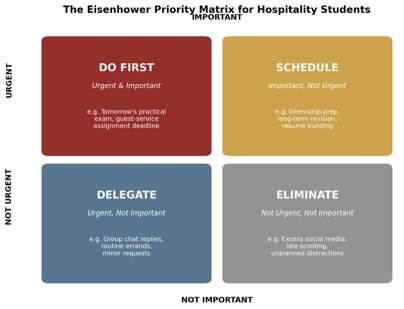
Infographic: The Eisenhower Priority Matrix helps hospitality students separate urgent tasks from important ones.
3. Practice Time-Blocking for Practicals and Internships
Hospitality programs are hands-on by nature — front office simulations, kitchen practicals, and hotel internships all require dedicated blocks of time. Reserve fixed slots in your calendar for practical training and treat them with the same seriousness as a paid shift.
4. Avoid Multitasking During Study Sessions
It’s tempting to review housekeeping SOPs while replying to messages, but multitasking reduces retention and slows you down. Give each study session your full focus, then take a proper break before switching tasks.
5. Balance Academics with Part-Time Hospitality Jobs
Many hospitality students work part-time in hotels, cafes, or event companies to build hands-on experience. Map your work shifts against your class and exam schedule well in advance so neither your grades nor your job performance suffers.
6. Use Digital Planning Tools and Apps
Apps like Google Calendar, Notion, or a simple shared planner can help hospitality students track assignment deadlines, shift timings, and internship hours in one place — reducing the mental load of remembering everything manually.
7. Set SMART Goals for Each Semester
Specific, Measurable, Achievable, Relevant, and Time-bound (SMART) goals give hospitality students a clear roadmap — whether it’s mastering a new cuisine module, completing a required number of internship hours, or improving guest-service scores.
8. Protect Rest, Sleep, and Recreation
The hospitality industry is demanding, and burnout is a real risk for students juggling coursework and part-time shifts. Good time management isn’t just about productivity — it’s also about deliberately protecting time for sleep, meals, and recreation.
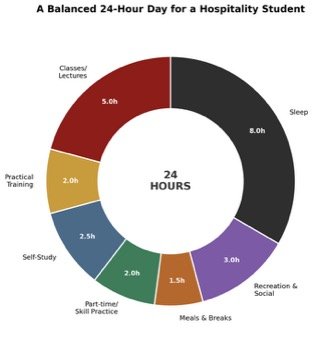
Infographic: A sample balanced 24-hour schedule for a hospitality student, including classes, practicals, self-study, and rest.
A Sample Weekly Time Management Plan
Here’s a simple weekly framework hospitality students can adapt to their own timetable:
| Day | Morning | Afternoon | Evening |
| Mon–Fri | Classes / Lectures | Practical Training / Labs | Self-study & Assignments |
| Saturday | Part-time Shift / Internship | Skill Practice | Rest & Recreation |
| Sunday | Review & Weekly Planning | Personal Time | Early Rest for the Week Ahead |
Benefits of Strong Time Management for a Hospitality Career
- Confidence under pressure: Hospitality careers involve fast-paced, guest-facing environments where composure matters.
- Better academic results: Students who manage time well tend to submit stronger assignments and perform better in practical assessments.
- Smoother internships: Employers notice students who show up prepared, on time, and organized.
- Long-term career growth: Time management is a transferable skill valued across hotels, airlines, tourism boards, and event management firms.
| “In hospitality, timing is everything — for guests and for students alike. Master your schedule today, and you’ll master the front desk, the kitchen, or the boardroom tomorrow.” |
Final Thoughts
Time management is a skill hospitality students carry with them long after graduation — into internships, first jobs, and leadership roles across the hospitality and tourism industry. Start small: pick one or two tips from this list, apply them consistently, and build from there.
At CATS, our hospitality programs are designed to build both the technical skills and the soft skills — like time management — that the industry demands. Explore our hospitality management courses and take the first step toward a well-organized, successful career.